.
.
.
Inspiration
This lesson will get your creative juices flowing !
Inspiration – where to find it & what to do with it once you’ve got it !
.
In Lesson 1, we looked at why it is so important to include Handwork in your children’s lessons – how it beneficially affects their heads, hearts & hands.
In Lesson 2, we studied our curriculum’s academic content, discerning the main ideas (& blocks) which will set the basic structure of our year. The various organizational methods which I proposed will be helpful for keeping track of that type of information.
Q & A
– Lesson 2
The question which was asked the most during Lesson 2 was :
“Where do I find the various goals for my year so that
I can fill them in on my block overview?”
Good one!!
I went back over all of my notes & found that I had mostly used these sources (which are Steiner-based). You can glean a lot of information from them for FREE. They all mention handwork although that is not their focus. If you don’t have a curriculum or are augmenting the one you have, you will find enough here to build a very well-rounded year.
NOTE : I highly recommend them all but try to stay focused on your current age/grade
– you could read for days !
East Africa Teacher Development Program
– includes a child development overview plus full curriculums for grades 1-3
(the site is in German but the downloads are in English)
The Waldorf Home Educators Yahoo Group
– many ideas for various grades as well as thoughts on developmental stages
Parenting Passageway
– check the homeschooling grades section
– also search “realistic expectations” & “essential soul tasks”
– lots of info here about the early years too
Detroit Waldorf School Scope & Sequence
– a very comprehensive outline of this school’s curriculum
(for some reason this document isn’t on their site anymore, so just google the phrase)
Lesson 3.1
Creativity & Inspiration
First –
Watch Lesson 3.1
Next –
At this point, you no doubt are thinking about the various handwork skills that a child is “supposed” to develop at points during their education.
We will take a detailed look at those in Lesson 4.
For now, we are going to stick with learning how to guide them (& YOU) through capturing & organizing ideas.
A key point here is to remember that you are looking for YOUR ideas as well as THEIRS.
You will be amazed at how often what’s on their minds is aligned to what you’re going to be teaching them next.
.
The LOVE LIST
We are now going to have some fun with a quick exercise.
I have created something I call the Love List.
You can download one HERE along with a few simple instructions.
Make sure you print one out for you & one for your child(ren).
Try to put down the ideas that pop into your head right away – you may find that others spring into mind over the next few days. Just keep adding them in!
Let your children fill in or draw their ideas – you might be surprised at what they put on their Love List!
There are some examples in the course Gallery.
BONUS
Before we end this section, I’m going to leave you with this BONUS – (if you haven’t seen it – you’re in for a real treat !)
Watch this TED talk by Elizabeth Gilbert, I doubt you’ll ever forget it !

Call your muse, settle down with your favourite comfort drink & let your mind wander – even if you only have 15 minutes – it’ll be worth it…
Lesson 3.2
Handwork Ideas Board
First –
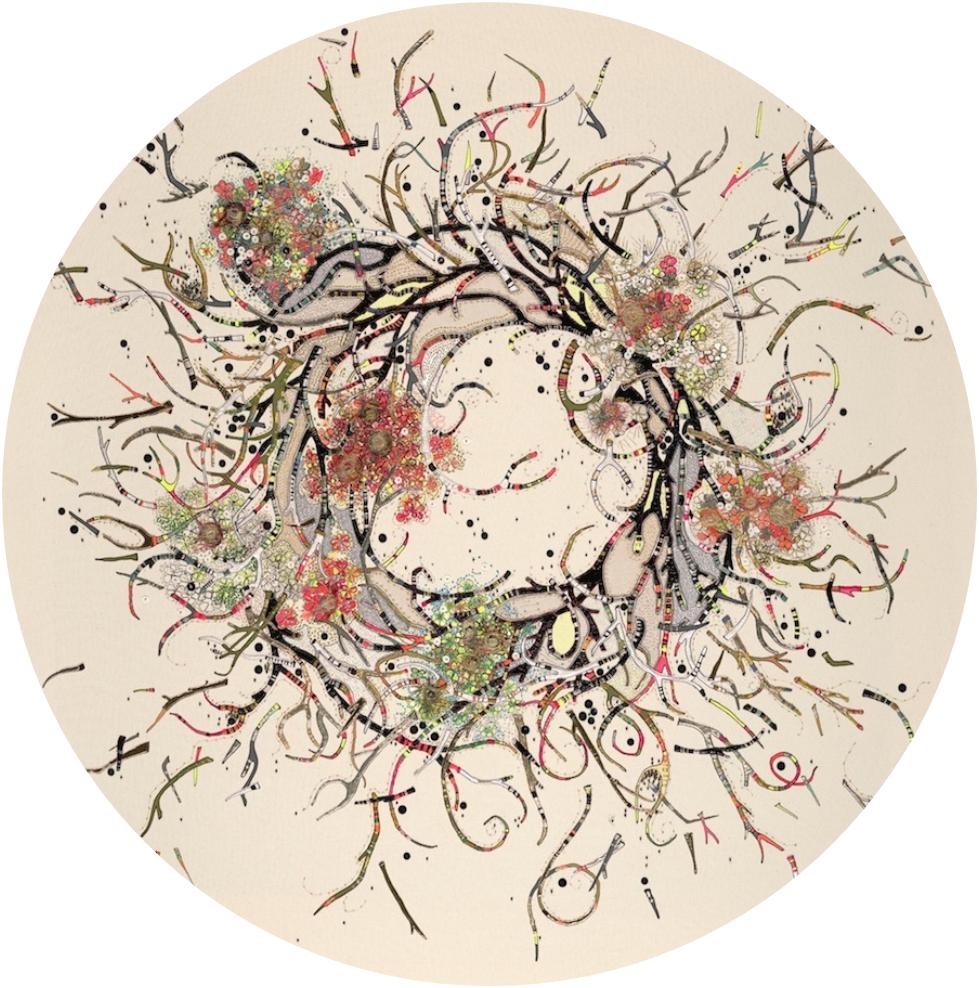
CLICK on the embroidery below to DOWNLOAD your HANDWORK IDEAS BOARD instruction sheets.
Next –
WATCH the second video for this lesson.
.
Coming up in Lesson 4, I will share an original Handwork Skills Chart which I’ve compiled after combing through ALL of my resources. (That took me ages… I have a LOT…!)
Having this will be like getting the keys to the castle !
You’ll be able to mix & match skills for any age child.
Another BONUS !!
Here’s a bonus video, an interview of Li Edelkort who is one of my design goddesses. She owns an international trend forecasting company & has the most uncanny ability to foresee coming trends & patterns in the world of design.
.
.
When discussing the possibility of a future Europe that doesn’t produce textiles, she says:
within a short period of time, the house will dress up in all different expressions of textile: knitted, crocheted, printed, embroidered, as jacquards or as colourwovens. The consumer will start using a bit of fabric here and there; a knitted pouf, a felt plaid, a tactile carpet or traditional table linen. People will think about a bigger surface and will reinvent the curtain, consider wall-to-wall fabrics and upholster furniture with tweeds and patterns instead of leather. In reaction to our virtual existence, we will need more real emotions and unknown surprising scenarios: tactility and dimension to compensate the flat screens in our lives, to give pleasure to our fingers. This seems why many designers have recently started to reinvent textiles with often handmade and traditional but also high-tech processes. This focus from designers and other creatives will arrive just in time to prevent the demise of the textile industries. We have only a few years left to save these endangered species. Let’s talk about textiles for the years to come!
Perhaps textiles will be the new “must-learn” industry in the coming decades – just as computers & technology dominated the last 20+ years!?
I just LOVE the many ways that handwork fits into our lives & the fact that you can never explore them all!